Article 26: The Integrated Archive – Engineering the Functional Illusion
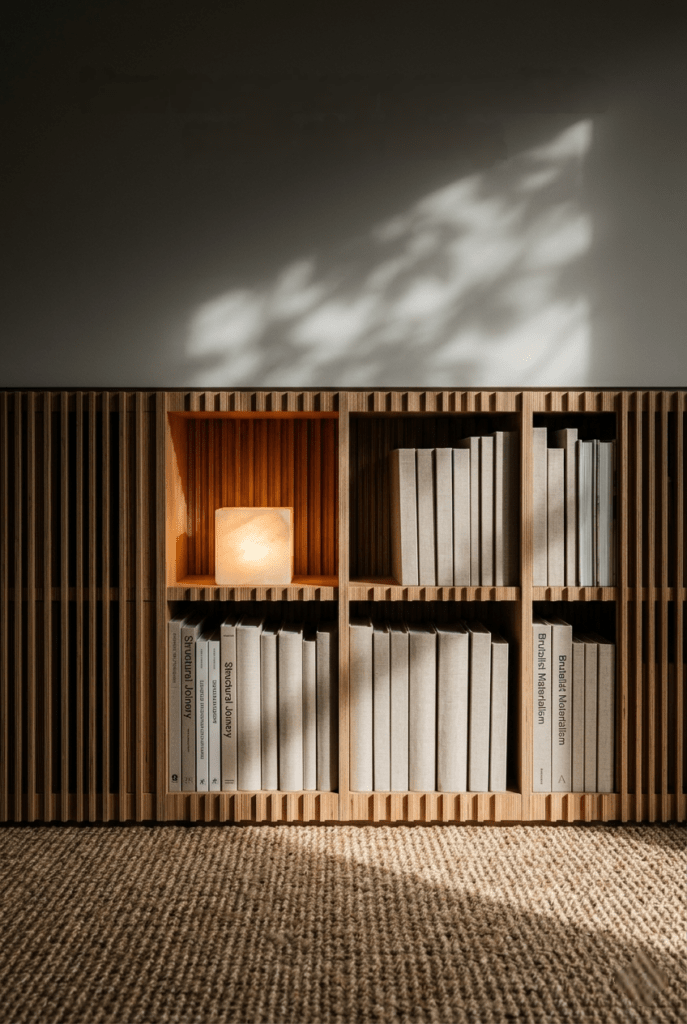
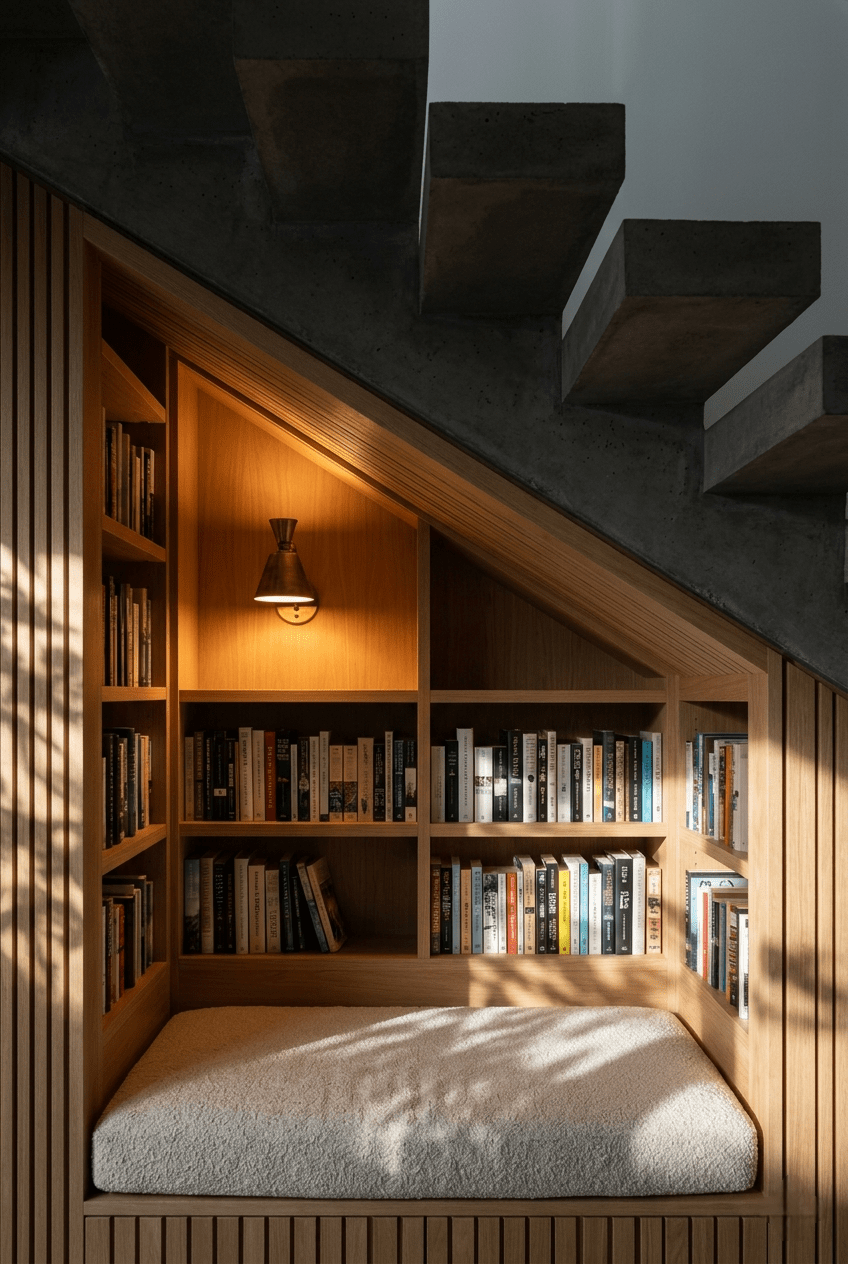
The Architectural Narrative:There is a profound luxury in absence. The modern home library no longer needs to be a cluttered repository of visible spines; it can exist as a purely architectural void. Welcome to “The Integrated Archive,” a Zone 5/6 transit and storage space where tectonic geometry takes precedence over traditional display. By stripping away visual noise and relying entirely on a strict 90-degree grid, we transform a windowless corridor into a monolithic gallery of Functional Illusion.
The 3D Texture Sandwich: Deconstructing the Space
1. The Foundation: Polished Charcoal Concrete
To anchor a space that relies heavily on floating elements, the floor must possess visual weight. Polished Charcoal Concrete provides an unbreakable, monolithic foundation. Its high-friction, mottled surface absorbs ambient light while its subtle polish acts as a dark mirror, catching the sharp reflections of the overhead geometry. This creates a grounded, cavernous energy—a true sanctuary isolated from the rest of the home.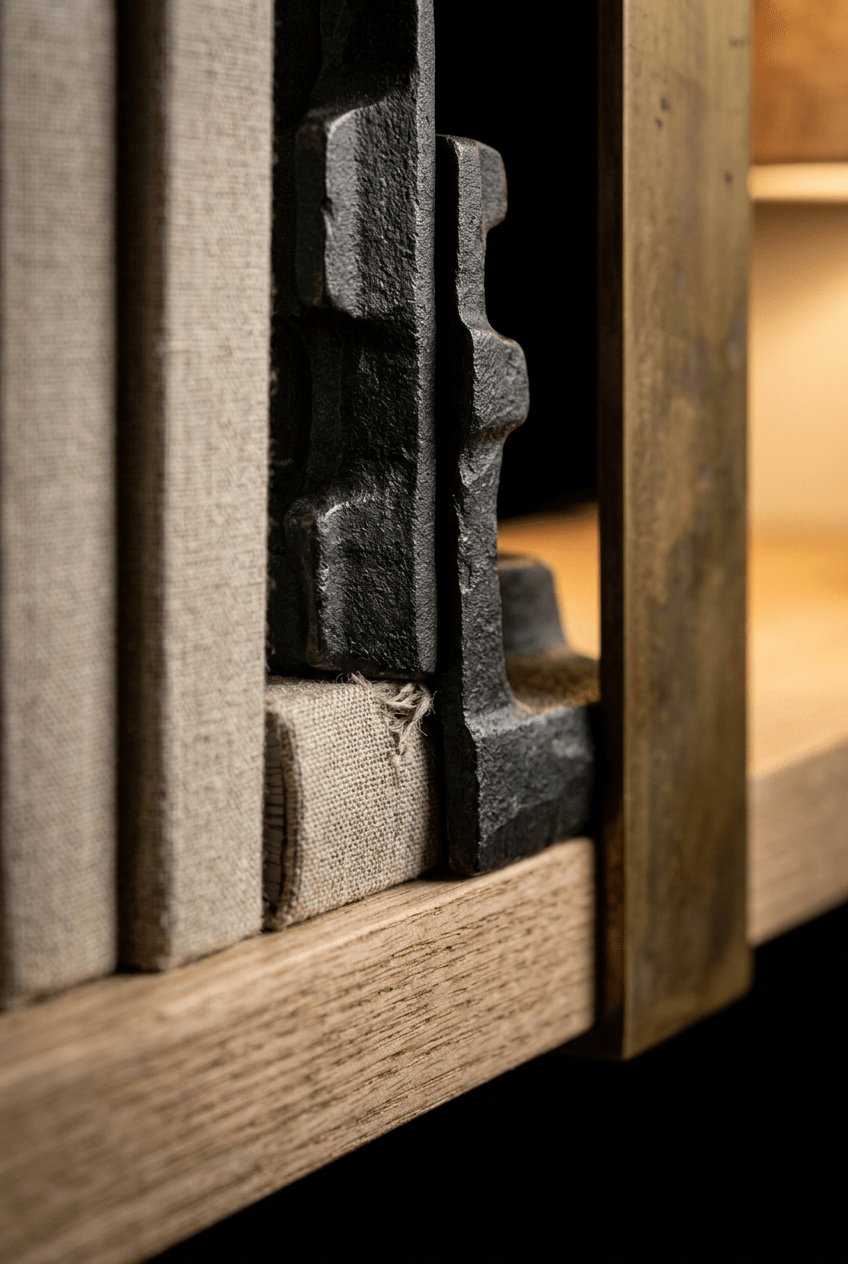
2. The Material Bridge: Smoked Oak & Brushed Aluminum
The hero of this space is the zero-tolerance joinery. Massive, floating shelves carved from heavy Smoked Oak dictate the horizontal planes, bringing organic warmth to the brutalist environment. To support this timber without sacrificing the minimalist illusion, the shelves are anchored by recessed Brushed Aluminum Channels. These metallic tracks act as the structural spine, offering a stark, industrial contrast to the rich wood grain. The intersection of cold, matte aluminum and warm, ribbed wood is where the “Expensive Reality” of the room is defined.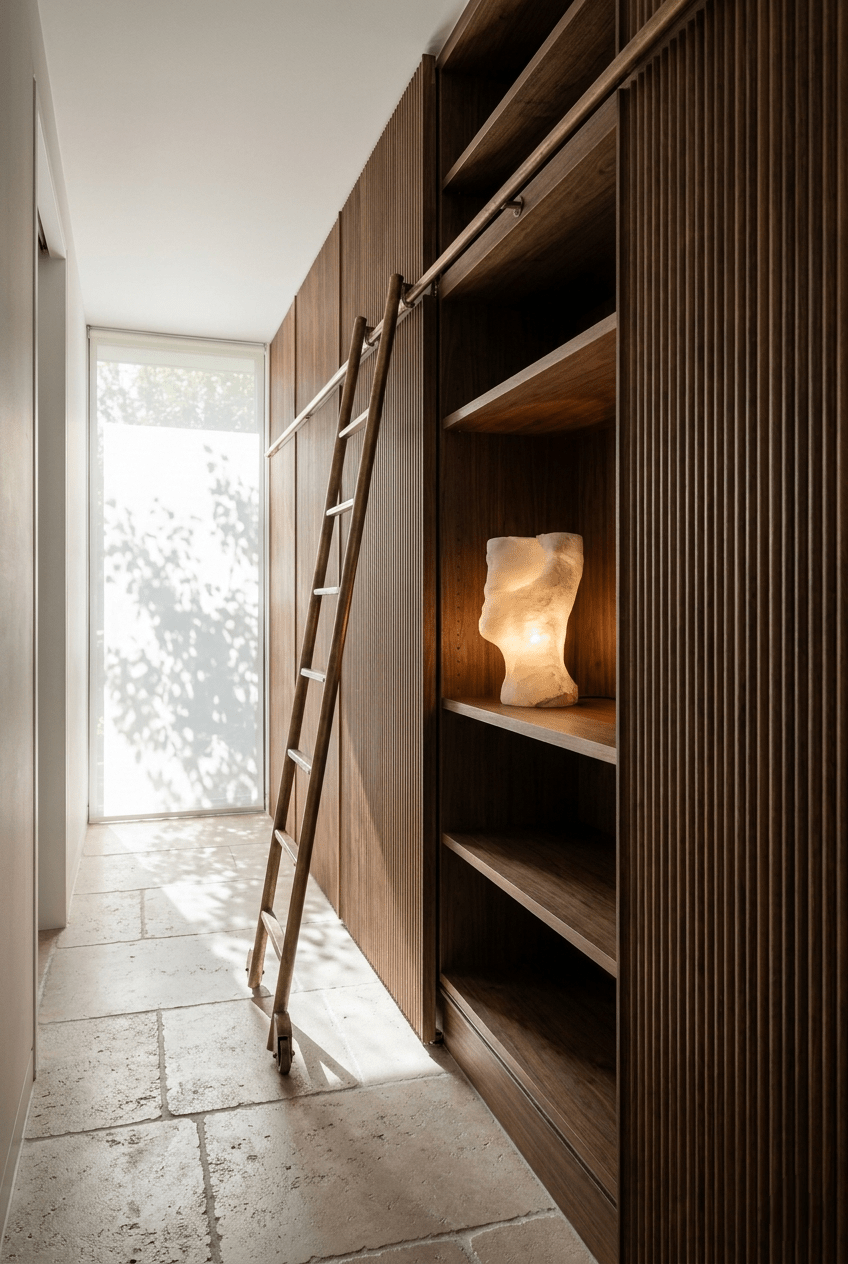
3. The Atmospheric Void: Deep Chiaroscuro & Hidden Illumination
In a windowless environment, lighting becomes architecture. We utilize absolute Chiaroscuro—deep, heavy shadows pierced only by highly intentional, razor-thin light sources. Hidden within the brushed aluminum tracks are integrated 2700K amber LED strips. These act as functional “heat-sinks,” casting sharp, horizontal blades of warm light exclusively across the wood grain. This lighting strategy eliminates visual fatigue, replacing the harsh glare of traditional downlights with a soft, glowing tension that guides the eye through the endless grid.