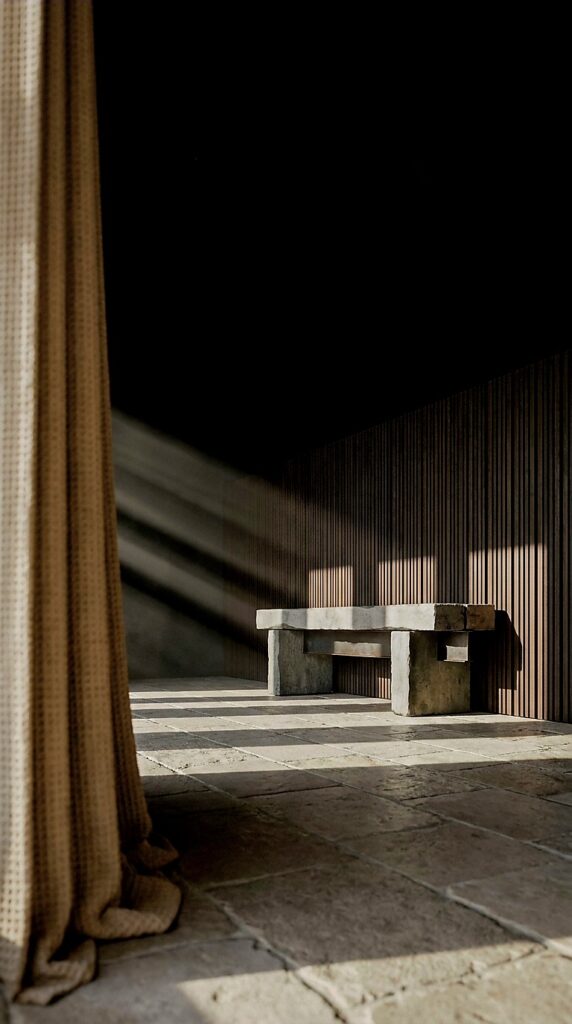
The Anatomy of Organic Brutalism: A Sanctuary Material Guide
IntroductionIn the modern Sanctuary, architecture is no longer just a structural necessity; it is a silent conversation between raw, unyielding stone and the refined warmth of timber. This is the essence of Organic Brutalism. Unlike the cold, industrial brutalism of the past, the “Organic” pivot focuses on restorative textures and the psychological impact of light. To build a luxury aesthetic, one must move beyond mere decor and enter the realm of Tectonic Anatomy.
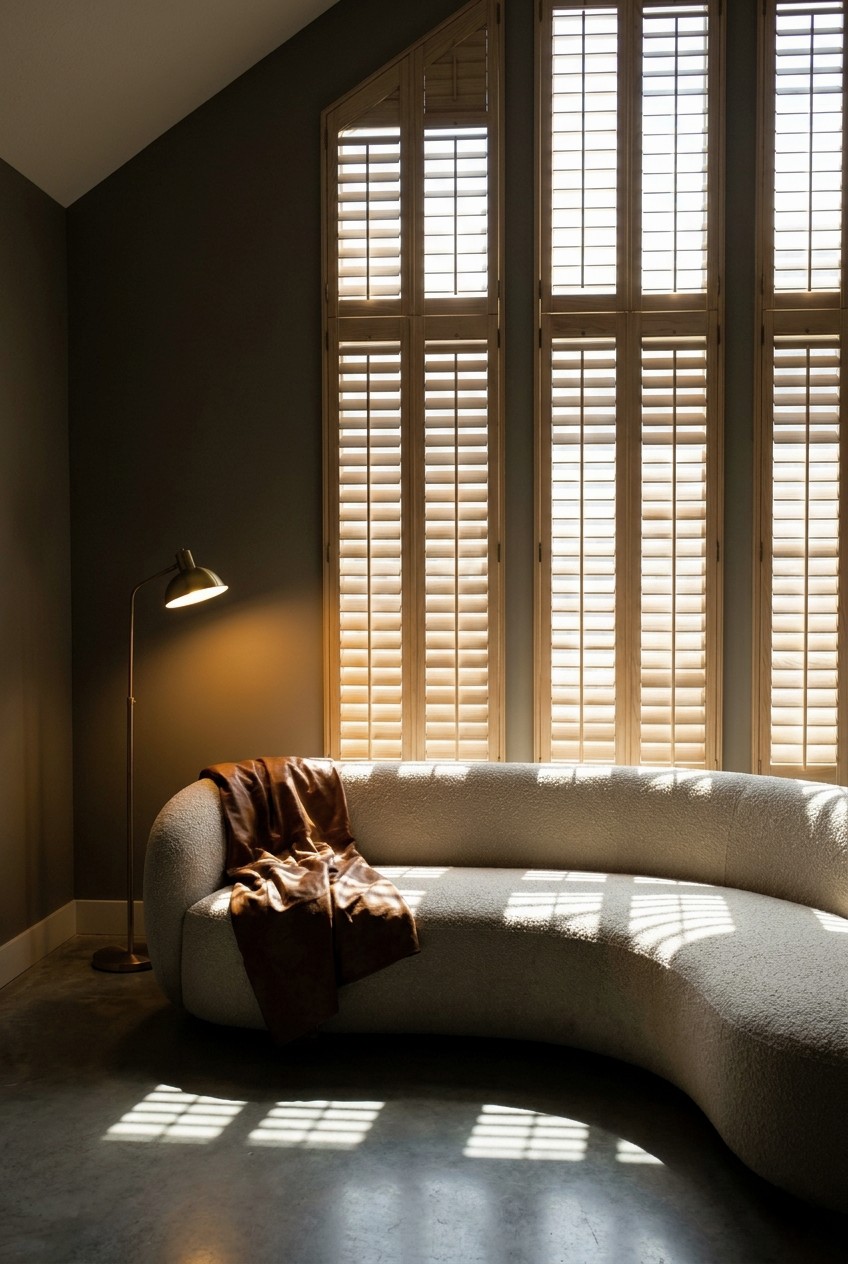
The 70/30 Chiaroscuro Balance
Visual silence is not the absence of light; it is the strategic management of shadow. In the Awakening Fade phase, the atmospheric mandate shifts. We prioritize 70% high-angle 6000K daylight—mimicking a fierce, optimistic sun—raking across surfaces like Scandinavian Ash.However, the true luxury is found in the remaining 30% shadow void. By allowing portions of the architecture to dissolve into deep, heavy shadows, we create a 3D “Texture Sandwich.” This depth prevents the room from looking flat or digital, grounding the inhabitant in a space that feels physically “heavy” and permanent.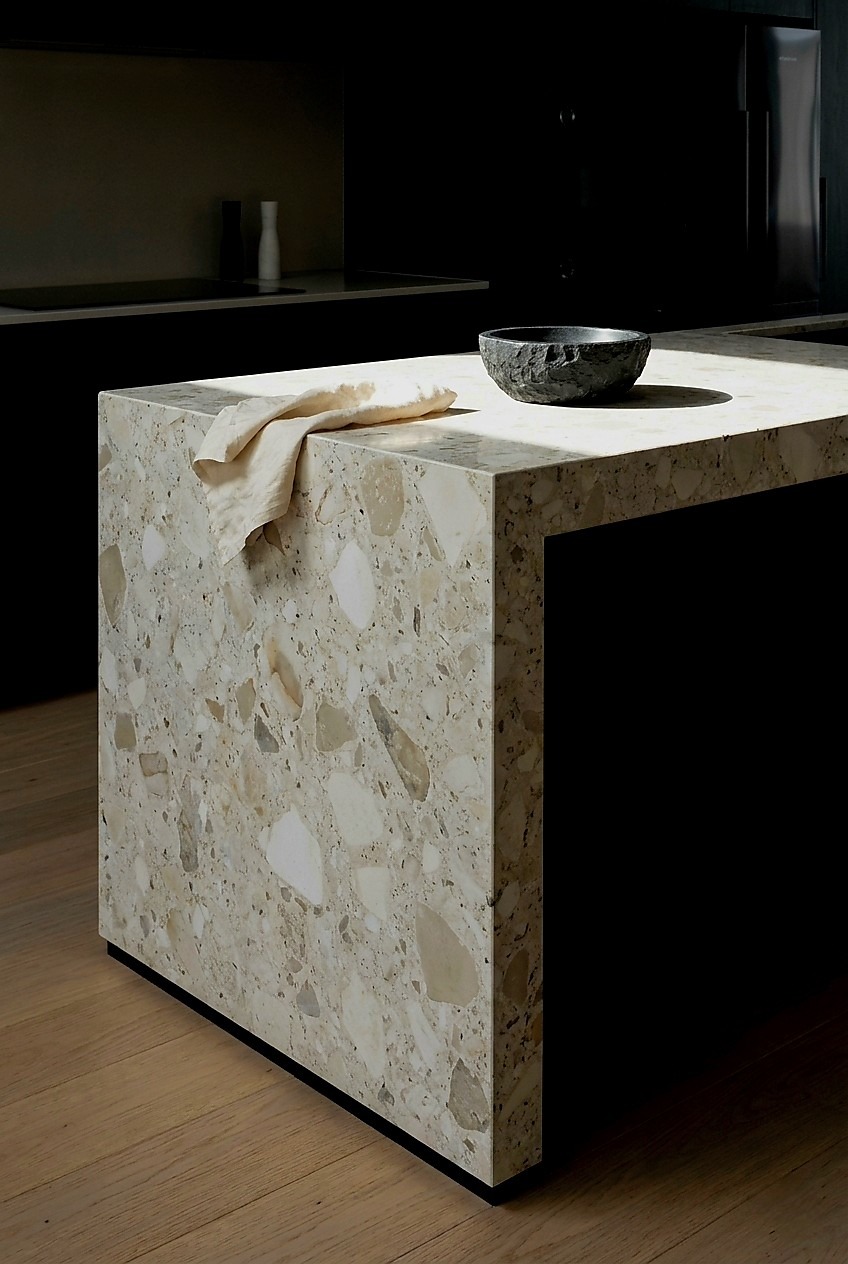
The Precision of Shadow Gaps
Traditional moldings and baseboards are the “noise” of standard construction. In a true sanctuary, we utilize the 5mm Shadow Gap. This technical detail allows walls to appear as though they are floating monoliths, disconnected from the floor.When French Limestone meets Ash timber at a sharp, recessed intersection, it creates what we call a “Technical Spec Whisper.” It is a subtle signal to the viewer that every millimeter of the space has been considered. These gaps capture the “Light-Death” of forged cast iron accents, providing a sharp contrast to the internal glow of raw alabaster artifacts.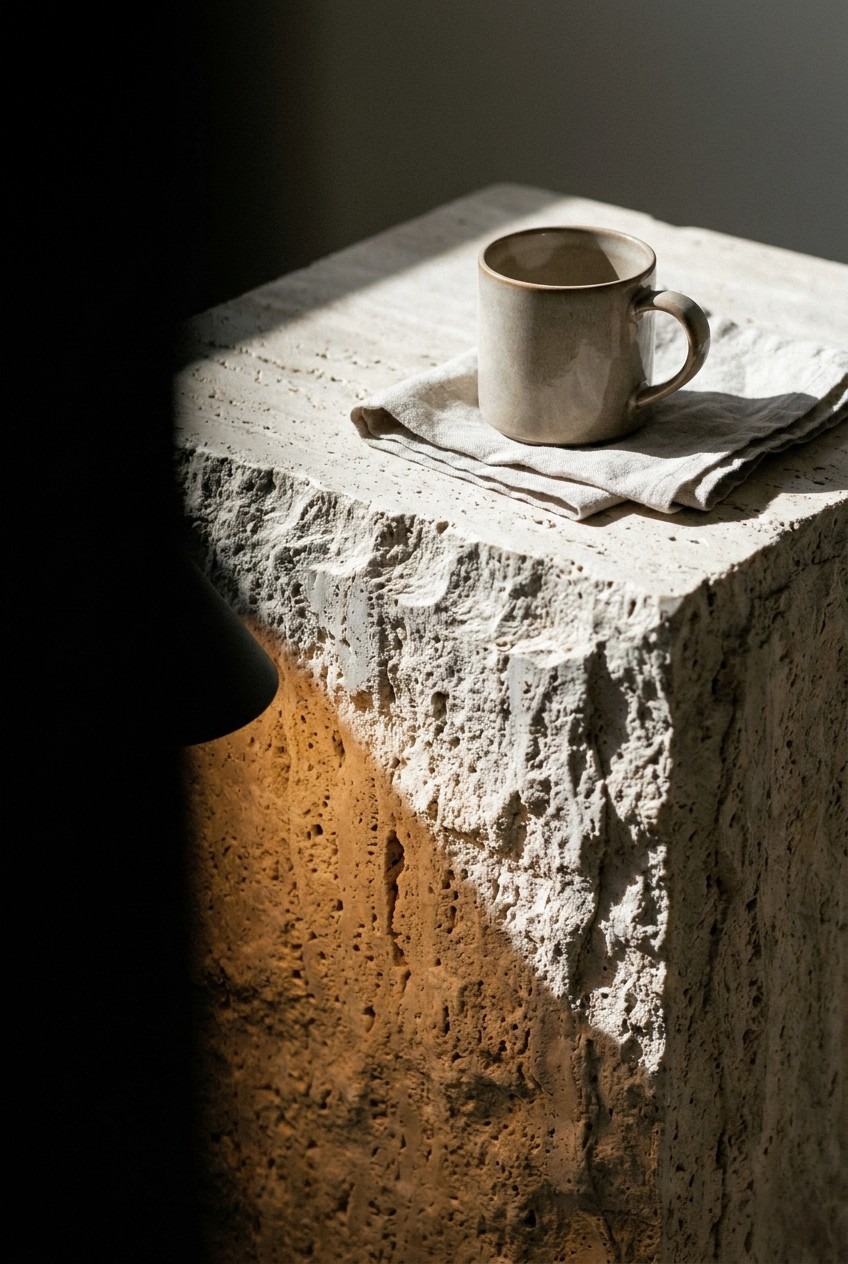
Material Collisions: Ash Wood & Tumbled Limestone
The “Material Bridge” of this space focuses on the collision of two primary anchors:- Scandinavian Ash: A light-catching timber with 90-degree rhythmic lines that provides the geometric soul of the room.
- Tumbled French Limestone: A high-friction, chalky foundation that acts as a “Light-Sink,” absorbing the glare and providing a matte, velvety finish to the floor.
Conclusion: Engineering Visual Silence
Organic Brutalism is an exercise in restraint. By focusing on Micro-Friction—the tactile grain where two materials meet—we move away from commercial clutter and toward architectural magnitude. Whether it is a monolithic vanity niche or a recessed hallway, the goal remains the same: to trigger a mirror-neuron response that allows the viewer to feel the “stone-on-stone thud” of the architecture before they even enter the room.