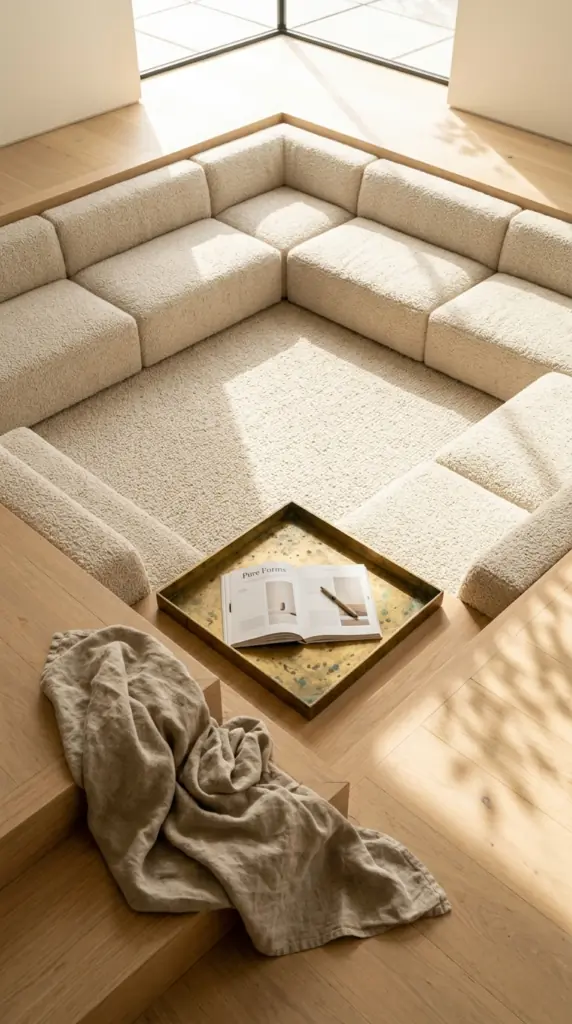
The Core Void: Architecture as a Digital Detox
Introduction: The Anxious Living RoomIf you examine the modern luxury living room, you will notice a persistent architectural failure: the entire spatial flow is directed toward a large, black digital screen. This creates an environment of perpetual passive consumption, preventing the mind from truly resting. To cultivate a genuine sanctuary, we must actively design for disconnection. Welcome to The Core Void—a space that completely rejects digital intrusion in favor of deep human connection, pure natural daylight, and profound psychological enclosure.
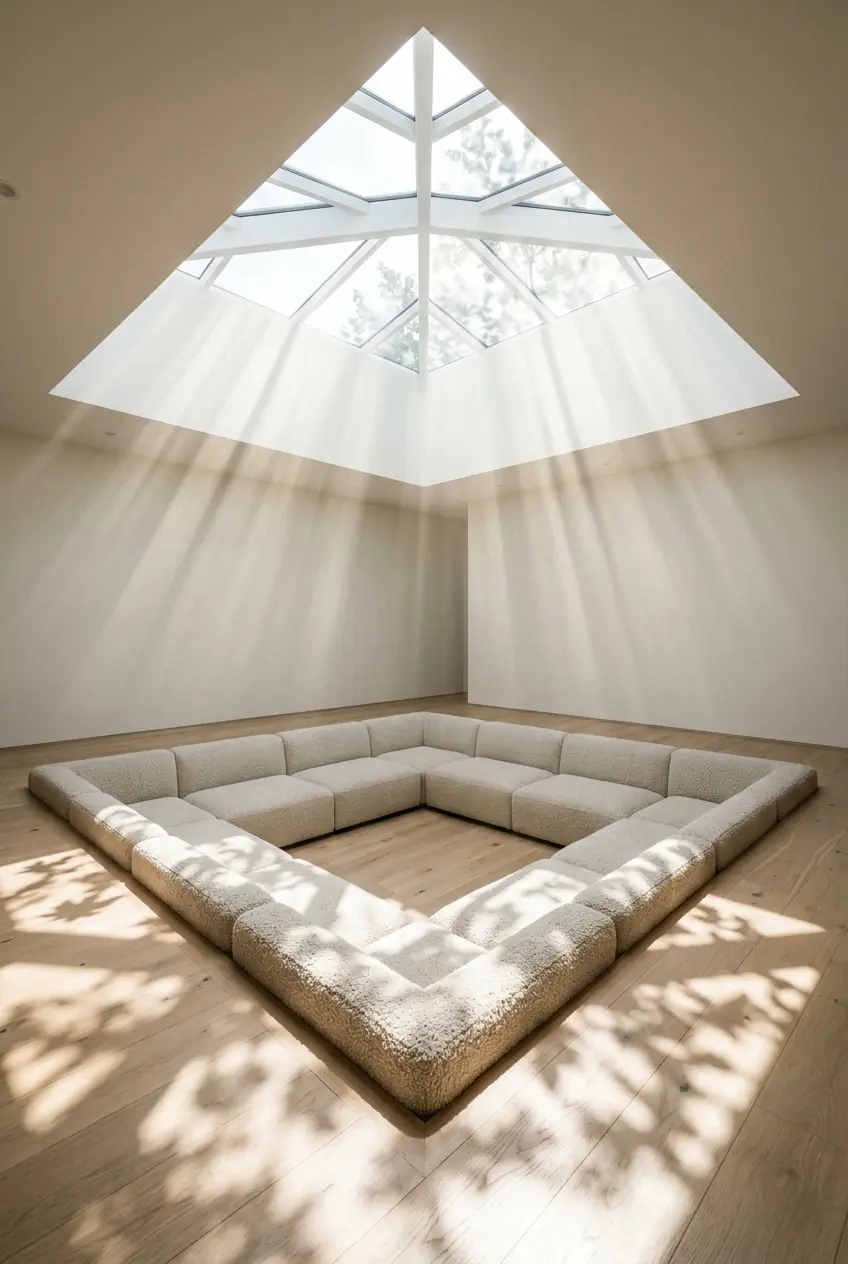
The Komorebi Pit: Engineering Enclosure
To break the habit of tech-centric seating, we utilized a sunken conversation pit. By physically lowering the seating plane into the foundation of Scandinavian White Oak, the architecture provides an immediate sense of primal protection—an “embrace” rather than a mere surface. We upholstered this massive, modular pit entirely in heavy Oatmeal Bouclé. Instead of staring at a wall, the room is pointed upward. A massive architectural skylight floods the space with Pure Daylight, casting geometric sunbeams and dappled Komorebi leaf-shadows across the floor. This natural, moving light acts as a living, dynamic wallpaper, replacing the static glare of a screen.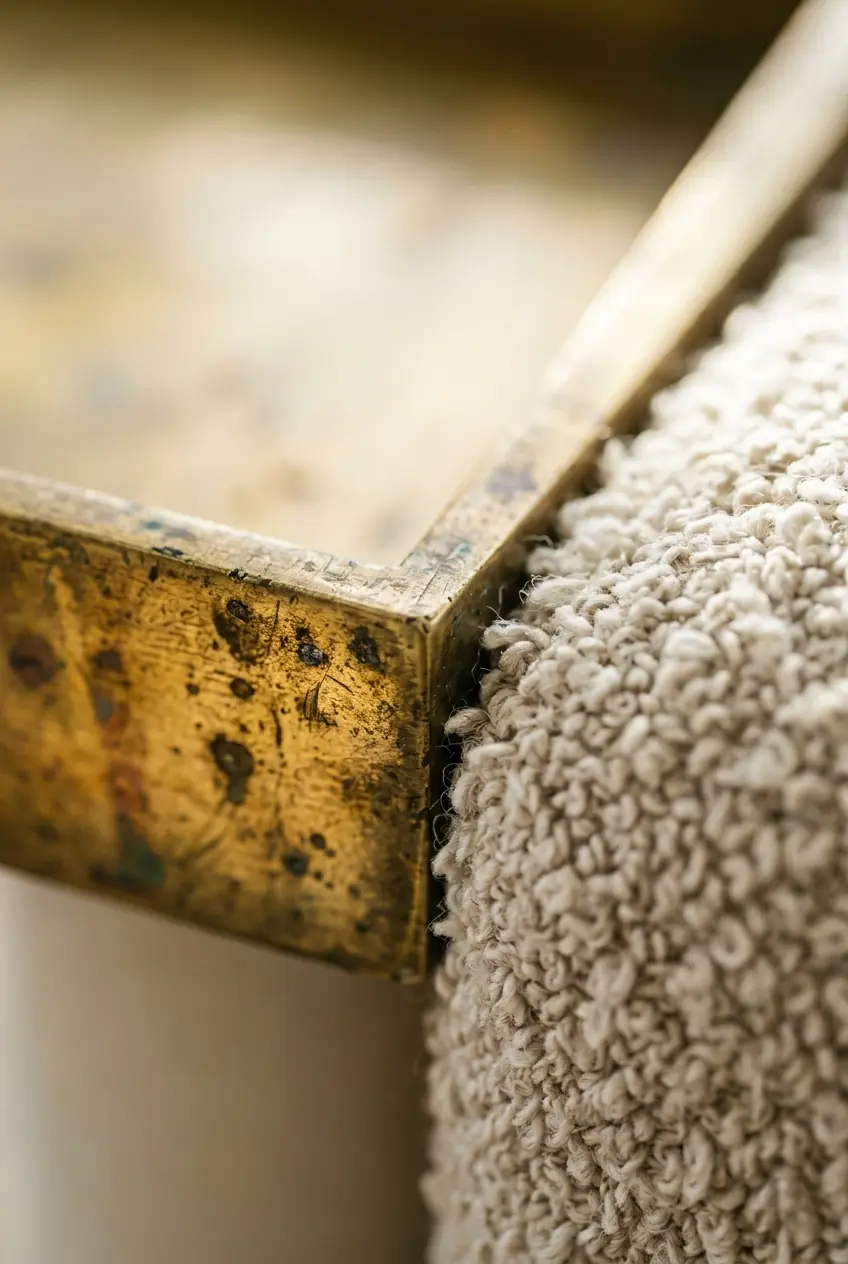
The Soft Collision: Tactile Grounding
When the mind is detached from digital stimuli, the senses heighten. The environment must rise to meet this heightened awareness through extreme tactile friction. We engineered a “Soft Collision” where the nubby, chaotic fibers of the Oatmeal Bouclé cushions rest directly against the smooth, matte discipline of the Scandinavian White Oak frame. This contrast provides a physical grounding mechanism. The eyes and hands have complex, organic textures to explore, which slows the heart rate and anchors the inhabitant firmly in the physical present.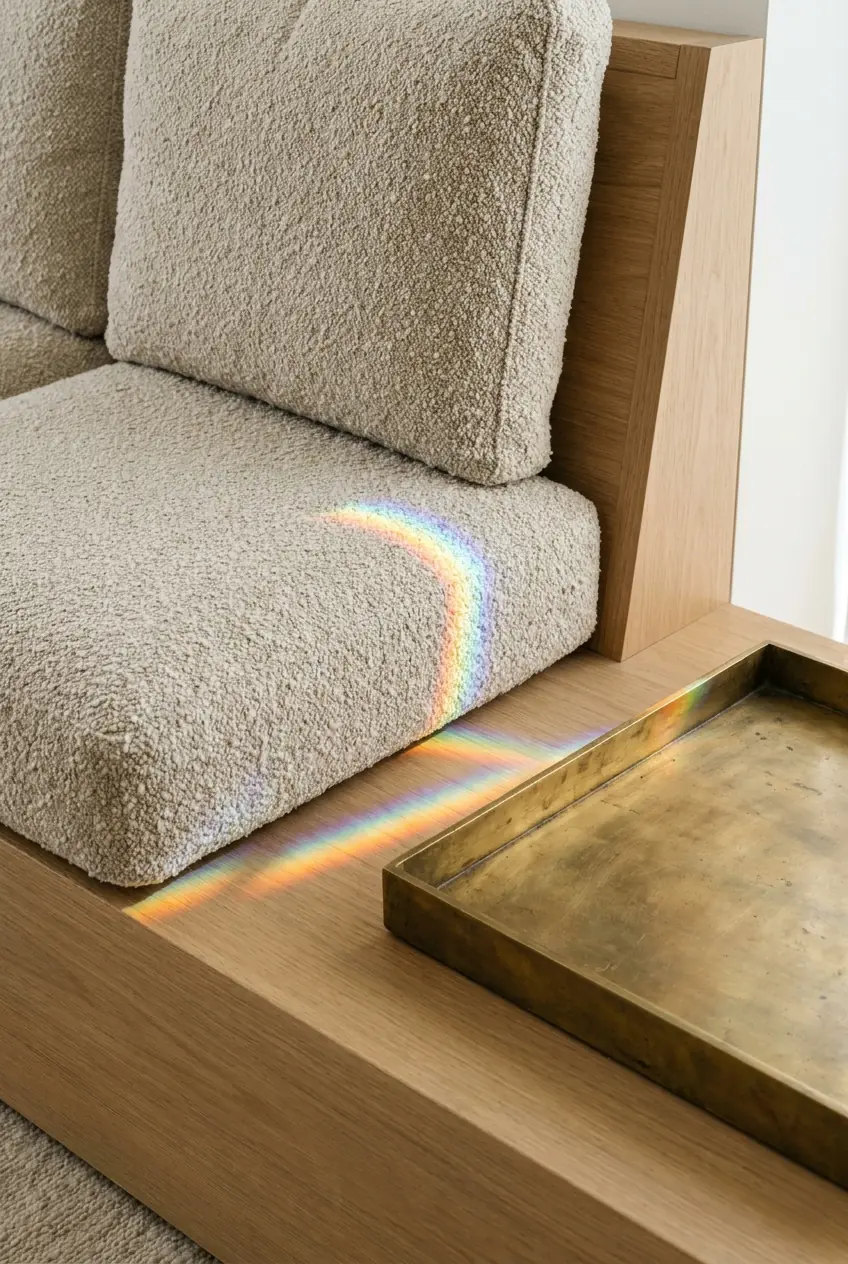
The Living Artifact: Brass and Light Physics
To finalize the digital detox, we introduce a single “Jewelry” artifact: a heavy tray of solid, Unlacquered Brass. Zooming in to the 10.5mm intersection where the brass rests on the bouclé, we witness the beauty of organic decay. Because the brass is unlacquered, it oxidizes over time, developing a unique patina. When the high-end, 3D daylight hits this metal, it does not reflect a sterile, digital perfection; it reflects the slow, warm passage of time. A single open design book resting on this tray provides the final psychological cue—a whisper of implied rest, inviting you to sit, breathe, and simply be.ConclusionThe ultimate luxury is no longer access to technology; it is the architectural privilege of escaping it. By pointing the room toward the sky and filling it with high-friction, organic materials, The Core Void proves that the most restorative spaces are the ones that force us to disconnect.