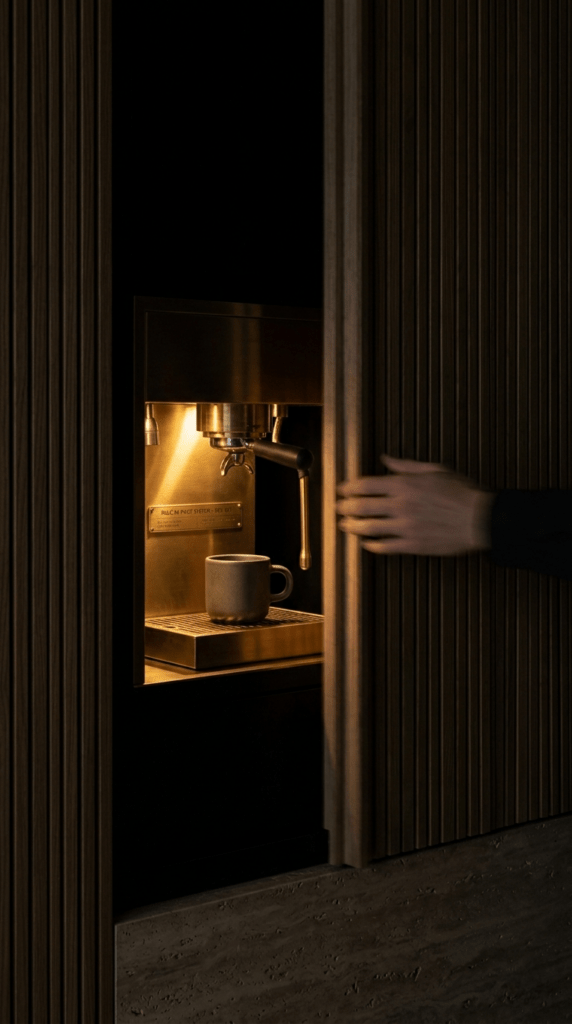
The Culinary Altar: Engineering the Stealth Sanctuary
Introduction: The End of Visual ClutterWhen you walk into a typical open-plan luxury home, the kitchen often betrays the peace of the space. The visual chaos of stainless steel appliances, cluttered countertops, and commercial cabinetry acts as constant “noise” that breaks the psychological silence of the room. But what if a kitchen didn’t look like a kitchen at all? What if it functioned at a professional culinary level, yet visually presented itself as a monolithic art installation? Welcome to The Culinary Altar—a masterclass in stealth architecture where the ultimate luxury is invisible utility.
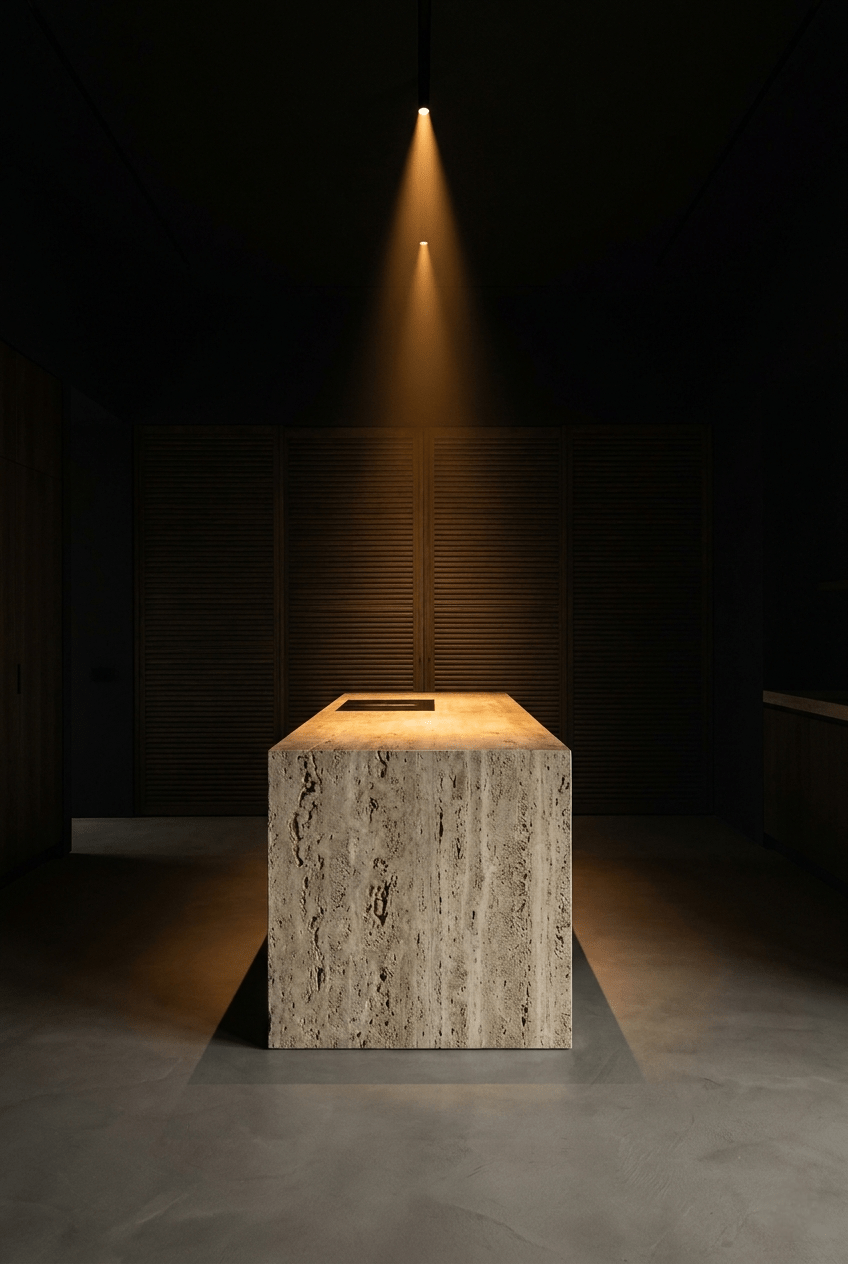
The Monolithic “Ruin” Island
The immediate focal point of the room demands your attention because it completely defies traditional kitchen design. Instead of a standard polished marble counter with barstools, the center of the room is anchored by a massive, 3-meter long block of raw, Pitted Travertine. Resting heavily on a floor of Seamless Microcement, this island feels less like modern cabinetry and more like an ancient, tectonic ruin. By stripping away overhangs and seating, it becomes a pure, sculptural altar dedicated to the ritual of preparation.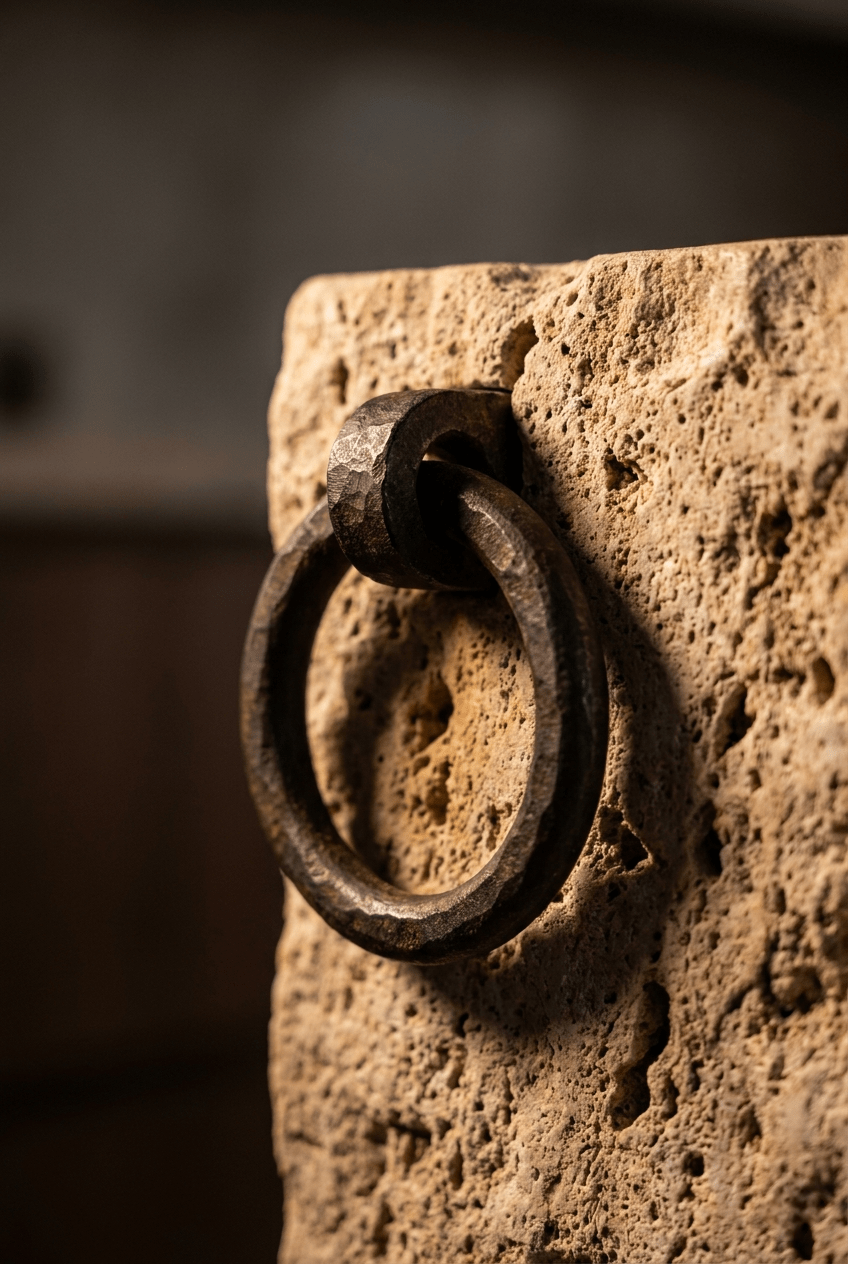
The Stealth Vault: Hiding the Machinery
As you take in the space, the obvious question arises: Where is the actual kitchen? The answer lies in the architectural boundary directly behind the stone altar. The entire back wall is clad in seamless, rhythmic Slatted Tambour Wood (Ash). This is the “Stealth Vault.” Utilizing master-crafted, precision pocket doors, the heavy slatted panels slide away to reveal state-of-the-art ovens, refrigeration, and prep zones only when required. When the cooking is done, the doors glide shut, instantly erasing the visual clutter and returning the room to a state of flawless, monolithic calm.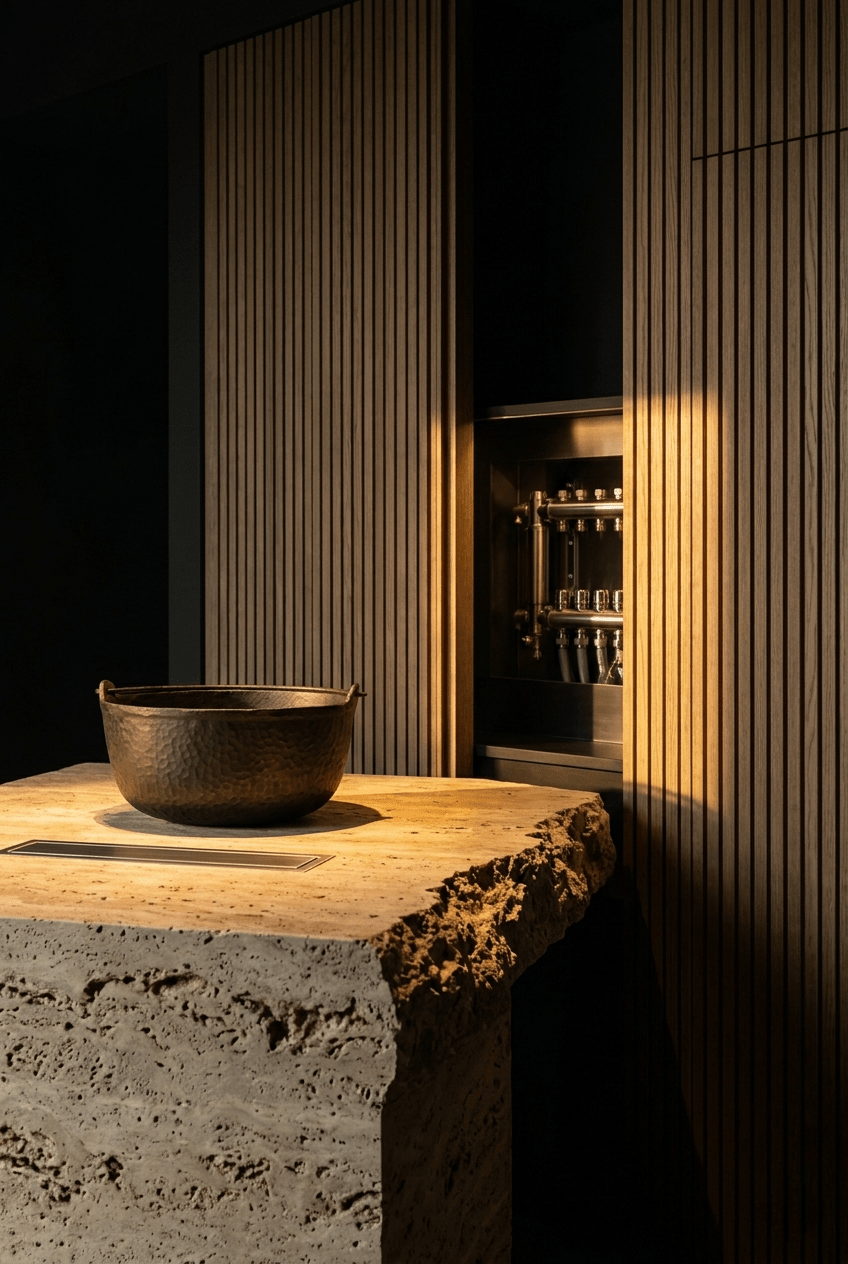
The Physics of Tactile Friction
To truly understand the “wow” factor of this space, you have to look closely at how light and materials interact. We utilize a strict subtractive lighting approach: zero overhead ambient floods. Instead, a localized, razor-sharp 2700K amber spotlight is directed exclusively at the travertine island, leaving the perimeter of the room in deep, cinematic Chiaroscuro shadow. When you place a heavy Forged Cast Iron vessel onto the porous stone altar, you witness the ultimate tactile friction. The matte iron absorbs the light entirely (Light-Death), while the deep pits of the travertine trap the amber glow, creating an atmosphere of immense physical weight and warmth.ConclusionThe Culinary Altar proves that you do not have to sacrifice the serene aesthetic of your sanctuary for domestic functionality. By using raw, heavy stone and brilliant stealth joinery, the kitchen becomes a place of silent, architectural awe.