The Loggia Pavilion: A Material Study in Dry Friction
Introduction: The Sensory Soul of the Transitional SpaceIn high-end architectural discourse, the transitional space between the interior sanctuary and the exterior landscape is often overlooked. However, the loggia serves as the home’s most critical sensory threshold. It is here that we witness the “Awakening Fade”—the seasonal transition where architecture must balance the fierce energy of the sun with the restorative cool of the earth. This is a material study of The Loggia Pavilion, focusing on the heavy, sun-scorched friction of limestone and the tectonic permanence of rammed earth.
The Foundation: Tumbled French Limestone
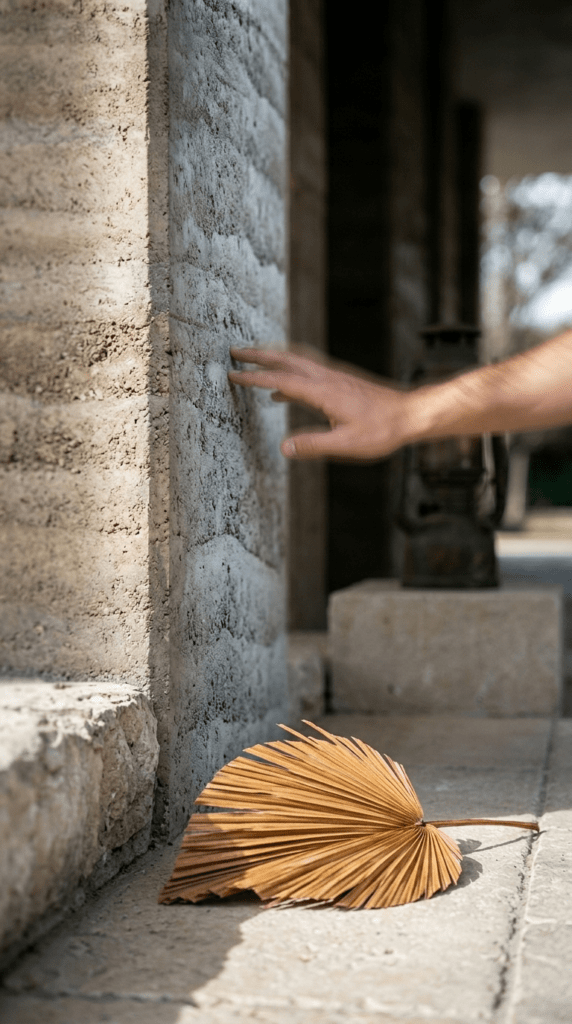
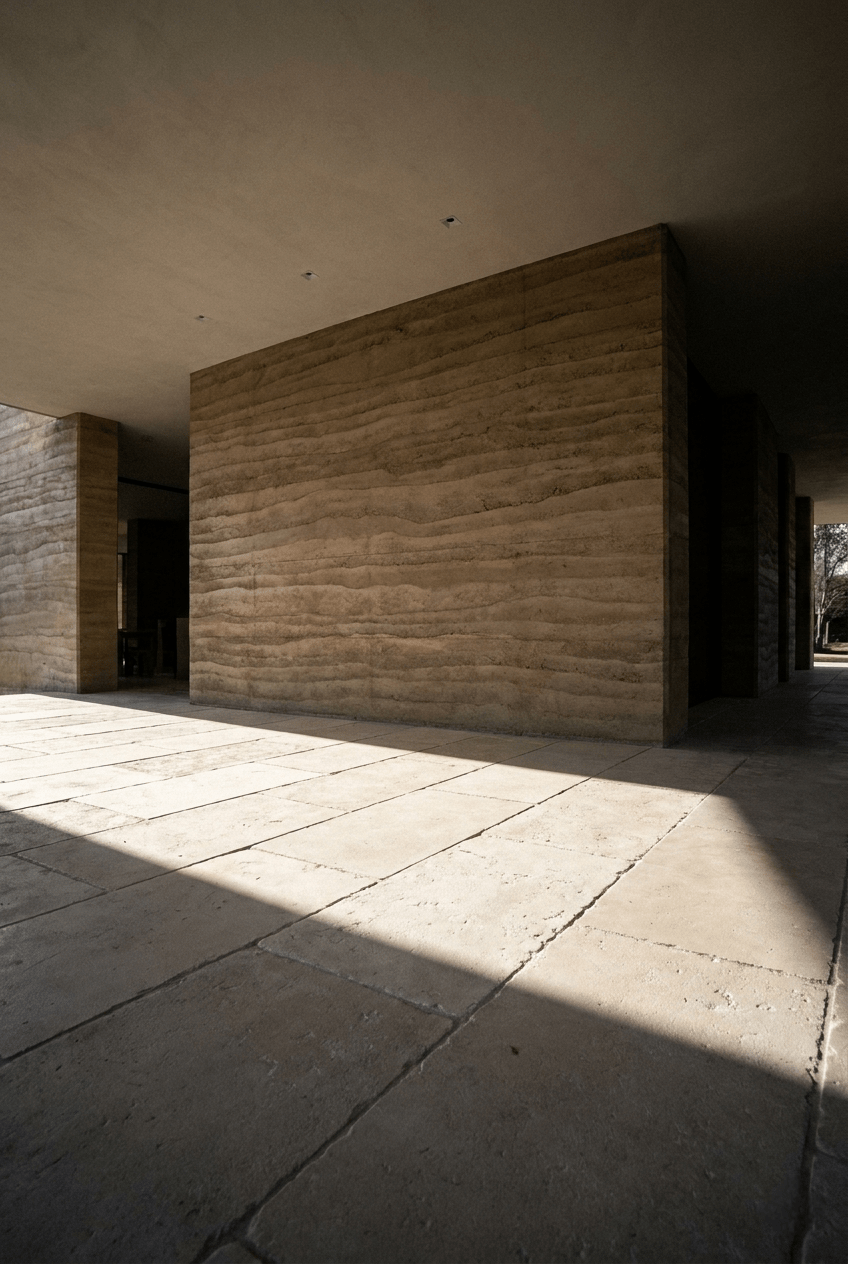
To ground the pavilion, we utilized oversized slabs of Tumbled French Limestone. Unlike polished pavers, this stone features a chalky, bone-colored matrix that acts as a physical “Light-Sink.” When fierce daylight rakes across its surface, the stone does not reflect a sterile glare; instead, it swallows the light, creating a velvety, matte foundation that feels ancient and indestructible. The tumbled edges provide a high-friction tactile response underfoot, anchoring the bather in the physical reality of the site.
The Architectural Bridge: Rammed Earth Slabs
The primary vertical anchor of the pavilion is a monolithic Rammed Earth Slab. This material is the ultimate expression of tectonic luxury. By compressing layers of local soil and minerals, we achieve organic, horizontal striations that mirror the geological history of the landscape. The rammed earth provides immense thermal mass, staying cool to the touch even in the height of the sun. It creates a “Refinement vs. Ruin” aesthetic where the precision of the architecture meets the raw, unrefined soul of the earth itself.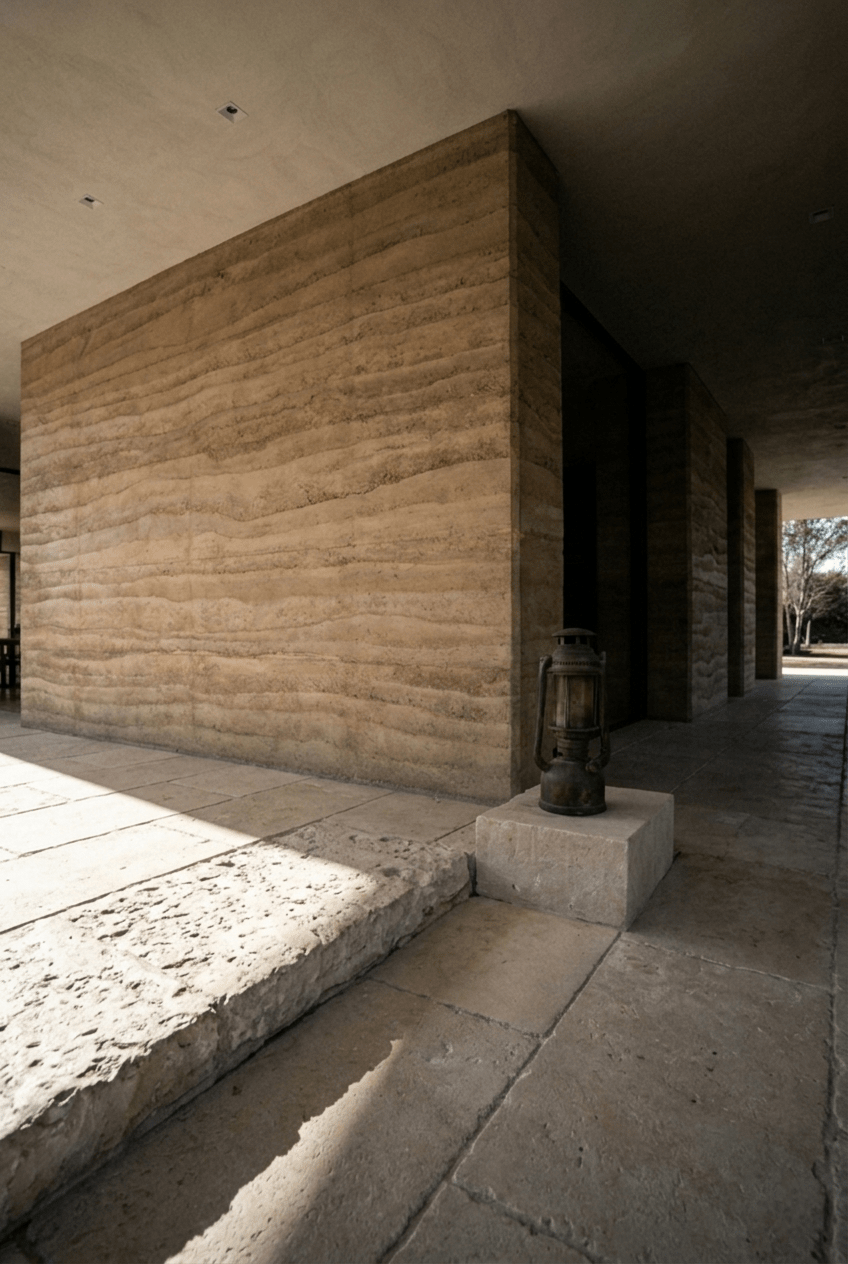
The Macro-Friction: Unlacquered Brass and Light Physics
At the 10.5mm boundary where a solid Unlacquered Brass artifact touches the dry limestone, we witness the pinnacle of sensory friction. Under the Rule 1.2 Pure Daylight protocol, the sun hits the brass, highlighting its golden oxidation and manual knurling. The contrast between the “Light-Catcher” metal and the “Light-Sink” stone creates a high-contrast Chiaroscuro that defines the space. This is not just a terrace; it is a laboratory of light physics where every texture has been calibrated to respond to the fierce clarity of the season. ConclusionThe Loggia Pavilion proves that the exterior of the home can be just as restorative as the interior. By obsessing over the “Dry Friction” of limestone and rammed earth, we create a transitional sanctuary that feels grounded, permanent, and eternally in sync with the elements.