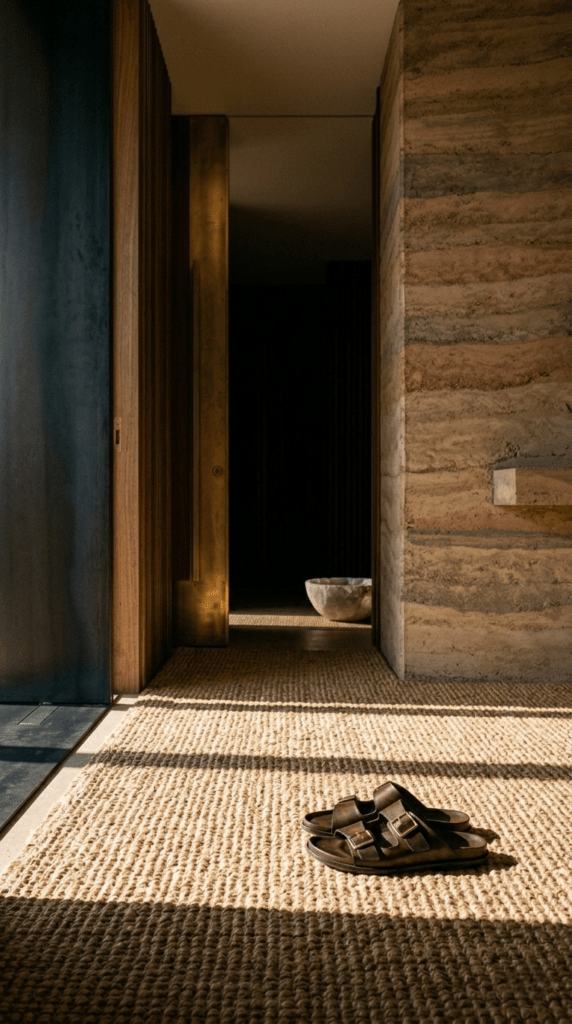
The Sensory Airlock: Solving Transitional Stress through Threshold Architecture
The Architectural Problem: The Instantaneous IntrusionIn high-end residential design, the entrance is often treated as a mere door—a thin barrier that fails to protect the sanctuary from the psychological noise of the outside world. This creates “Transitional Stress,” where the frantic energy of the city is carried directly into the home. Without a physical “reset,” the inhabitant remains in a state of high-alert. The challenge was to create an architectural airlock that forces the nervous system to recalibrate before entering the primary living voids.
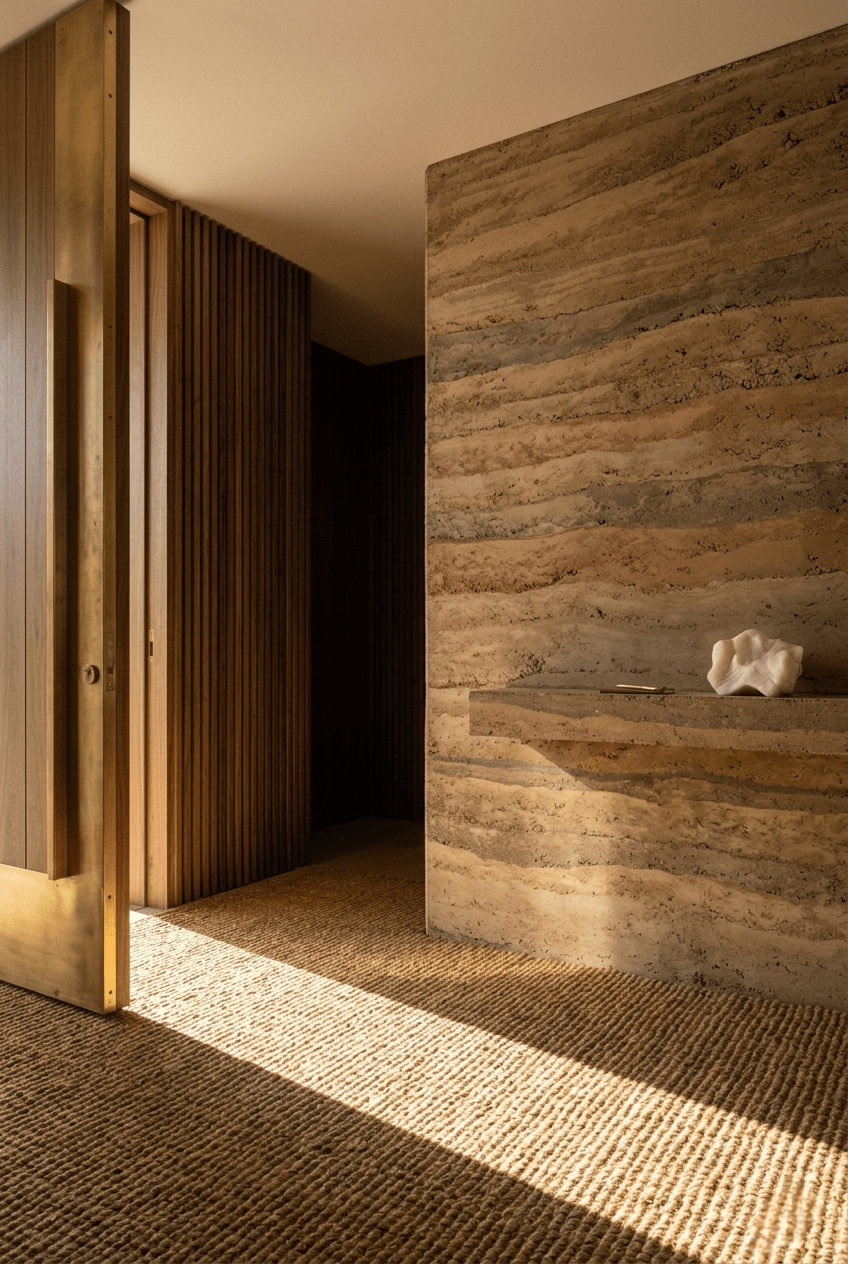
The Solution: The Heavy Threshold Pavilion
To solve the issue of transitional stress, we engineered The Threshold Pavilion. We achieved this by utilizing “Tectonic Mass”—replacing thin drywall with massive Rammed Earth Slabs. These slabs act as a psychological shield, their density providing an immediate sense of quiet. We paired this with Heavyweight Jute Matting. The high-friction fibers of the jute force a change in gait, providing immediate tactile grounding that strips away the frantic pace of the outside world.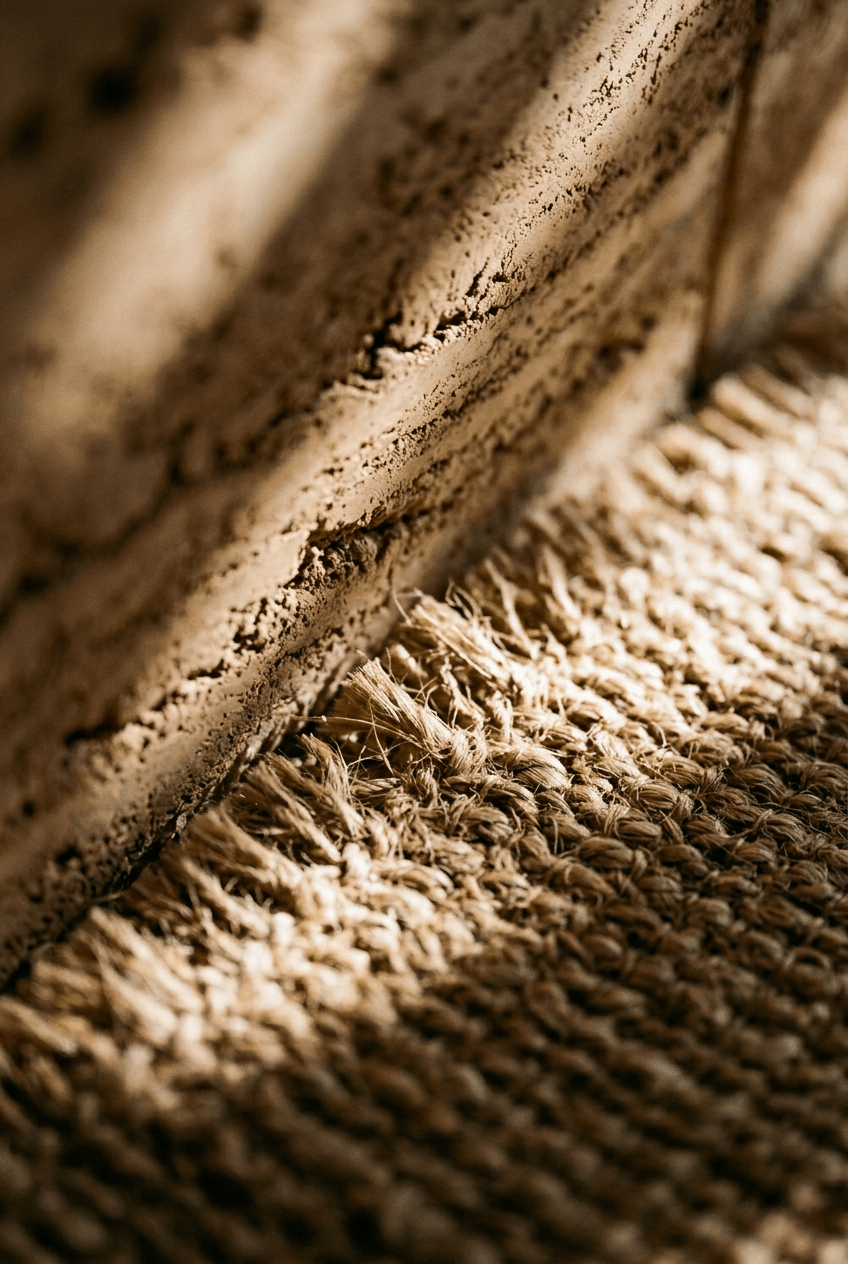
Achieving the “70/30 Lighting Rule”
The most critical component of this reset is the 70/30 Lighting Rule. Most homes fail because they allow “Light Shock”—where the bright, flat light of the outdoors floods the interior. We solved this by treating light as a material to be rationed rather than a utility to be maximized. Here is how we achieved the 70/30 balance:- The 30% Aperture (The “Catcher”): We limited natural light to a singular, narrow vertical opening at the door threshold. This creates a fierce, high-contrast sunbeam that illuminates only 30% of the pavilion floor, acting as a “Catcher” for the outside world’s energy.
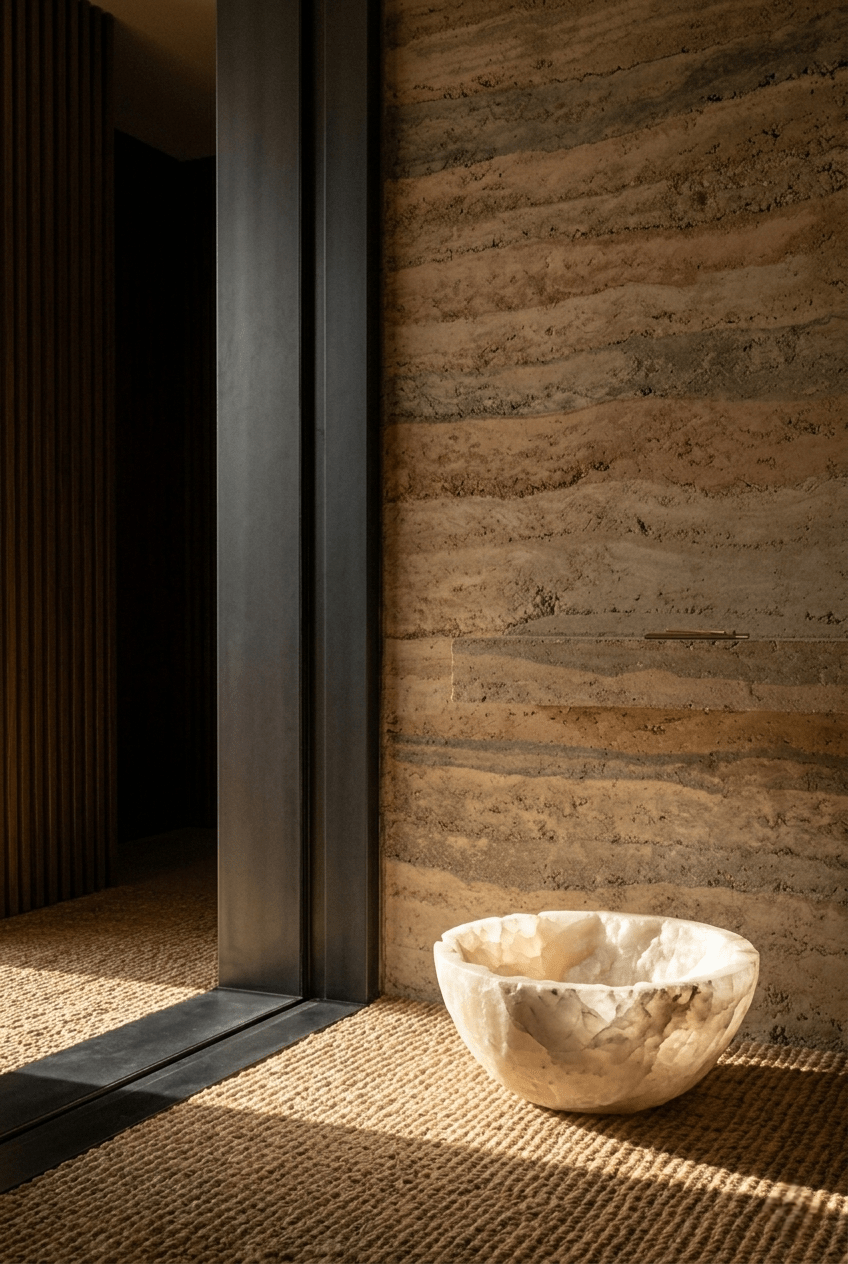
- The 70% Void (The “Sink”): We designed the rest of the pavilion as a light-absorbing “Sink.” By using non-reflective materials like Rammed Earth and Charcoal Jute, we ensured that 70% of the room remains in deep, protective shadow.
Technical Execution: Subtractive Design
We achieved this logical flow through subtractive design. Instead of adding lights, we removed them. By killing all overhead ambient fixtures and relying solely on the single sunbeam and the internal refraction of the stone artifacts, we created a “Protected Void.” This ensures the exterior narrative ends at the mat, and the sanctuary narrative begins in the shadows.The ResultThe Threshold Pavilion proves that a home begins long before you reach the living room. By logically applying the 70/30 rule and high-mass materials, we have created an architectural airlock that guarantees total transitional grace.